Your backyard can be much more than a patch of grass behind your home. With the right planning, it can become a comfortable place to relax, entertain guests, enjoy family time and connect with nature.
In 2026, Australian homeowners are increasingly looking for outdoor spaces that are beautiful, practical and easier to maintain. Native and climate-suitable plants, smaller lawn areas, outdoor living zones, natural stone, smart planting and water-conscious landscaping are all becoming more popular.
If you are planning a backyard makeover, these 25 backyard landscaping ideas can help you create an outdoor space that suits your home, lifestyle and local conditions.
Ready to elevate your backyard in Sydney? Unlock the potential of your outdoor space with top-notch landscaping services that fit your budget perfectly.
Why Backyard Landscaping Matters in Australia
Australian gardens need to work with the local climate rather than against it. Choosing plants suited to your area, reducing unnecessary lawn and using practical hardscaping can help create a garden that looks good without demanding constant maintenance.
Sustainable landscaping guidance recommends choosing plants that perform well in the local climate and reducing reliance on excessive watering and intensive maintenance.
At the same time, Australian homeowners are making greater use of their backyards as extensions of their indoor living spaces, including dining areas, entertaining zones and comfortable places to relax.
Here are 25 ideas to consider for your own backyard.
25 Backyard Landscaping Ideas for Australian Homes
1. Create an Outdoor Living Area
One of the biggest backyard landscaping ideas for 2026 is to make the garden an extension of your home.
Instead of having an unused lawn, create a dedicated outdoor living area with comfortable seating, paving, lighting and shade.
You could include:
- Outdoor sofas
- Dining tables
- A covered patio
- Built-in seating
- A BBQ area
- A fire pit
- Outdoor lighting
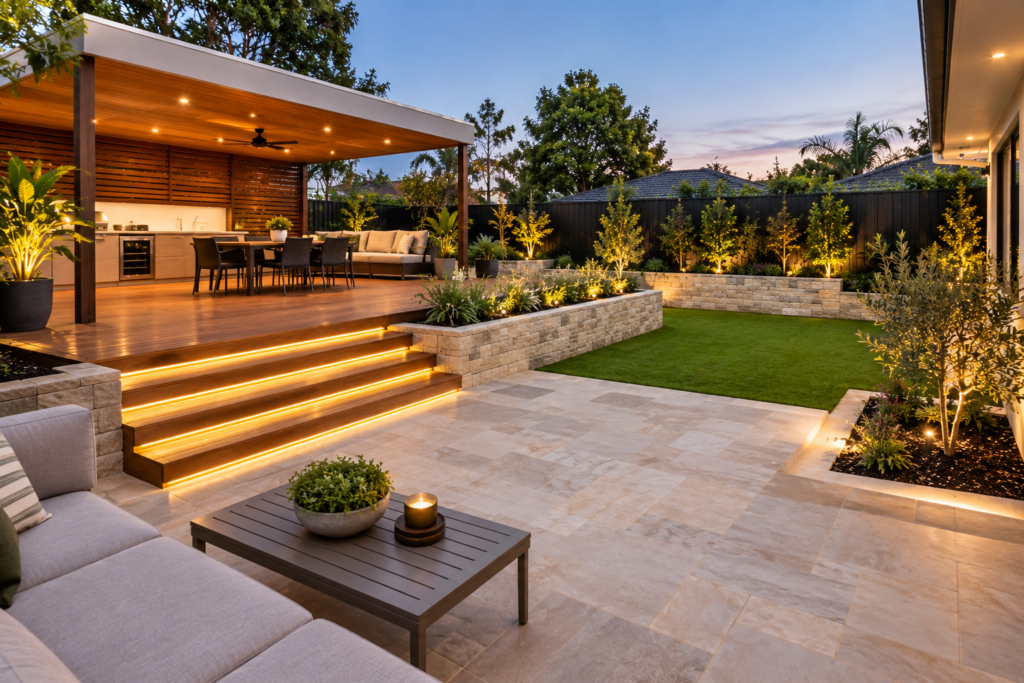
2. Replace Some Lawn with Garden Beds
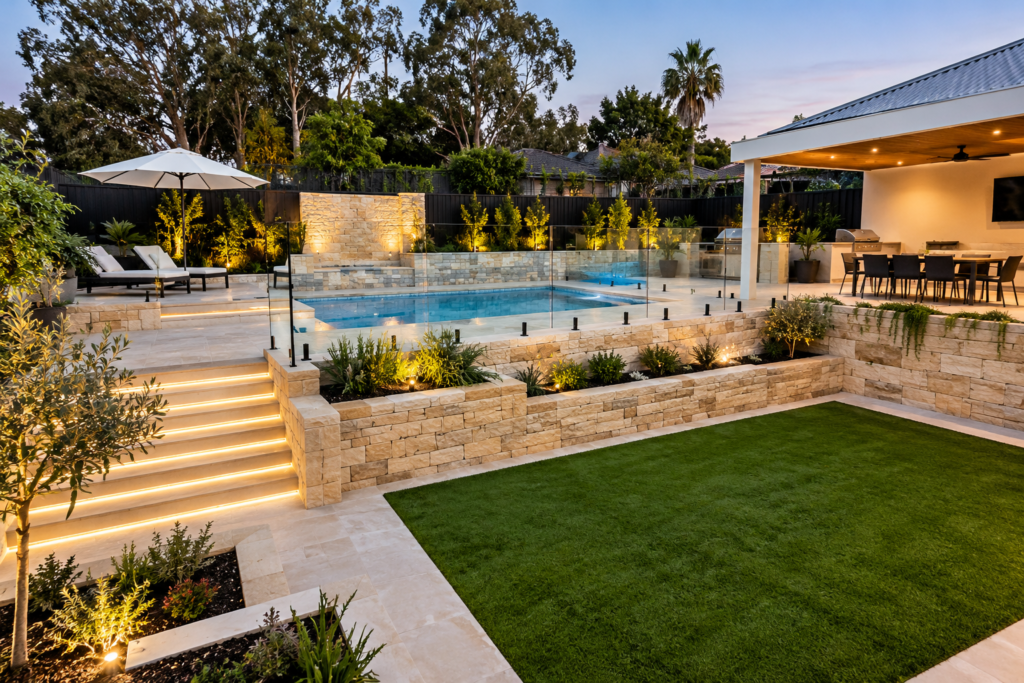
Large lawns can require regular mowing, watering and maintenance. If you do not use all of your lawn, consider replacing part of it with garden beds.
Use a combination of shrubs, grasses, groundcovers, feature plants and natural stone edging.
This can create more visual interest while reducing the amount of lawn that needs regular care.
3. Add Australian Native Plants
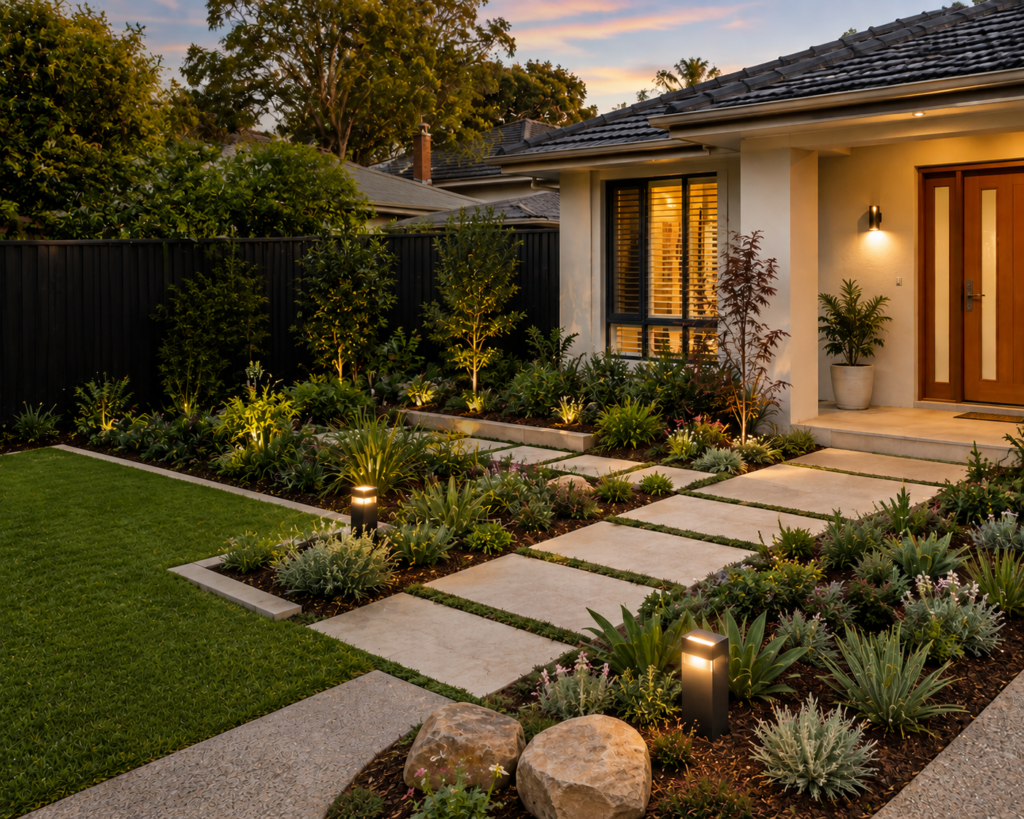
Native plants are an excellent choice for many Australian gardens, provided you select species suitable for your specific local conditions.
Plants such as Lomandra, Dianella, Grevillea, Bottlebrush and suitable native grasses can provide colour, texture and habitat.
However, “native” does not automatically mean maintenance-free. Different plants have different soil, water and climate requirements, so choosing the right plant for your location is important.
4. Try a Low-Maintenance Native Garden
If you want to spend less time maintaining your backyard, consider creating a low-maintenance planting scheme.
Group plants according to their water requirements and use mulch to help protect garden beds.
Australian gardening experts continue to highlight native and water-wise planting as useful approaches for lower-maintenance gardens.
A professionally planned garden makeover can combine planting, edging, mulch and irrigation into one coordinated design.
5. Use Stone Paving for Entertaining Areas
Natural stone can instantly give a backyard a more finished appearance.
Consider sandstone, travertine or other suitable paving materials for:
- Patios
- Courtyards
- Pool areas
- Outdoor dining spaces
- Garden paths
Urban Stoneworks offers premium paving and pathways using materials including travertine, sandstone and concrete.
6. Create a Stone Garden Pathway
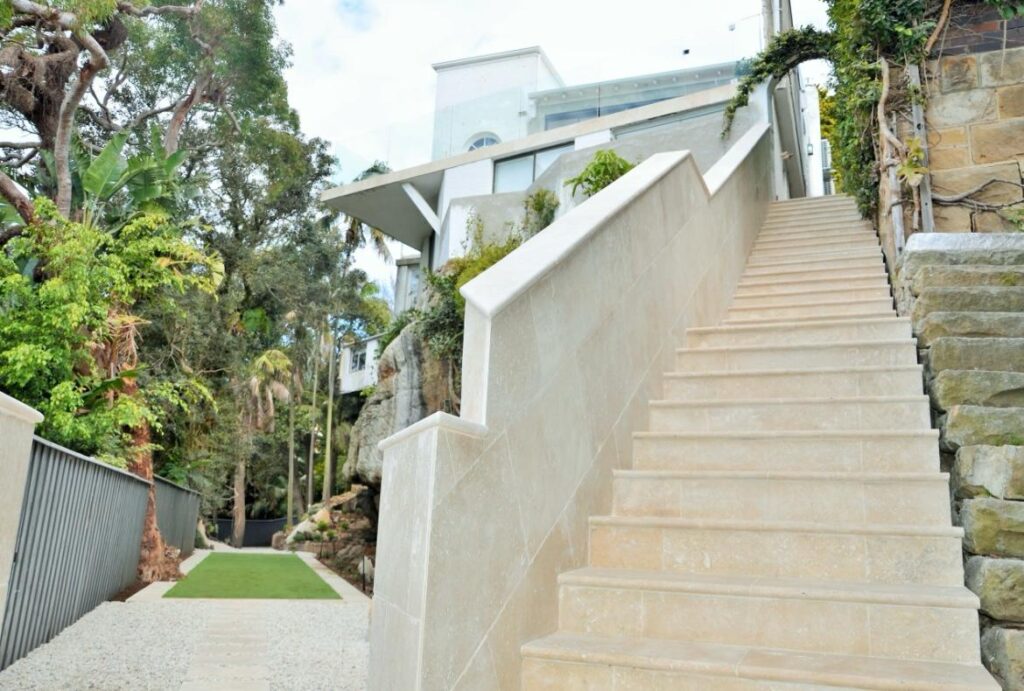
A garden pathway does more than connect two areas. It can become an important design feature.
Use paving stones to create a route from your back door to the garden, entertaining area, pool or side access.
For a natural look, combine stone paving with planting around the edges.
A carefully designed pathway can also make a small garden feel more structured and easier to navigate.
7. Use Large Pavers in a Small Backyard
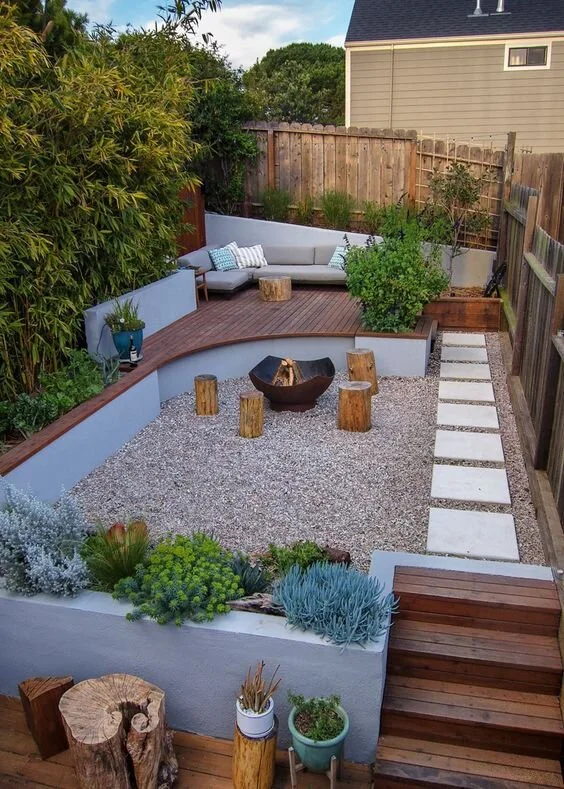
If your backyard is compact, large-format paving can help create a clean and less cluttered appearance.
Instead of using many small elements, larger pavers can provide stronger visual lines and make the area feel more open.
Keep the surrounding planting simple and use a limited material palette for a modern finish.
8. Add a Retaining Wall to a Sloped Backyard
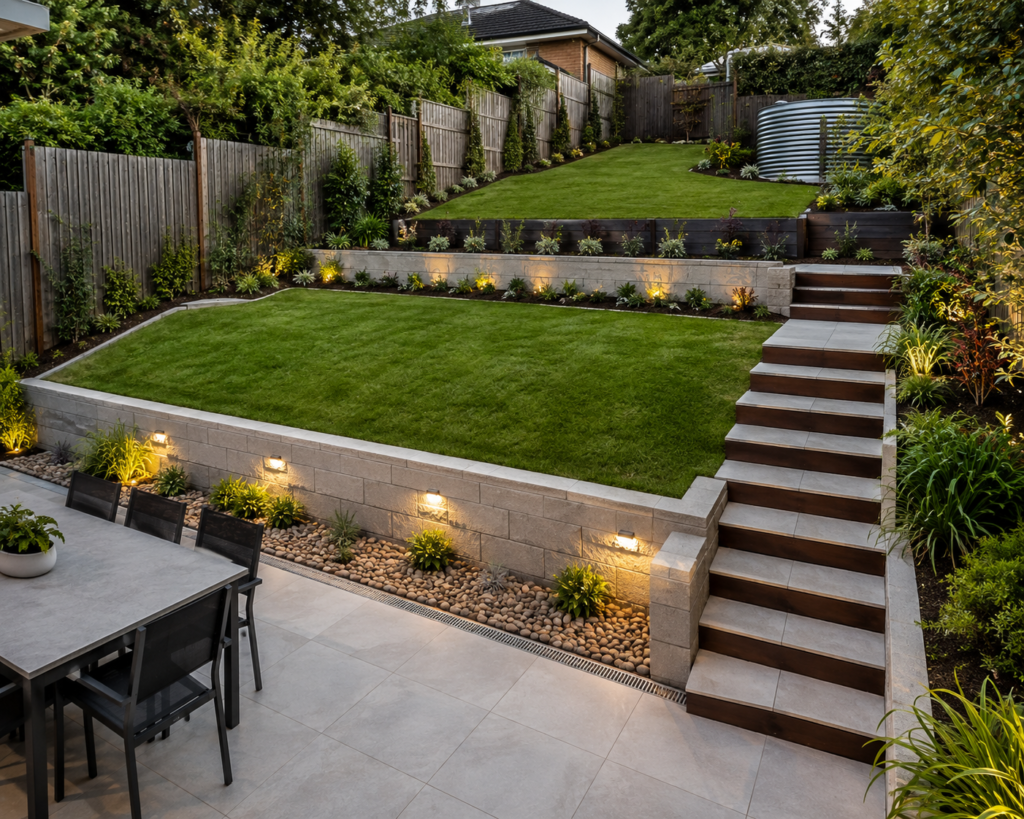
A sloping backyard can be difficult to use effectively. Retaining walls can help create different levels and make more of the available space usable.
Depending on the property and engineering requirements, retaining walls can be built using materials such as stone, concrete or sleepers.
9. Combine Retaining Walls with Garden Beds
A retaining wall does not have to look purely structural.
Use the area above or around the wall for planting. Grasses, shrubs and feature plants can soften hard edges and create a more natural transition between different levels.
This is particularly effective when the wall uses natural stone or materials that complement the surrounding landscape.
10. Build a Multi-Level Backyard
If your property has different levels, work with them rather than trying to make everything flat.
A multi-level landscape could include:
- A dining area near the house
- A lawn or garden area in the middle
- A lower garden or relaxation zone
- Connecting steps and pathways
Good landscape construction can turn difficult levels into useful features.
11. Add a Fire Pit Area
A fire pit can become a natural focal point for an outdoor entertaining space.
Create a dedicated paved or stone area around it with comfortable seating.
Make sure the design considers local regulations, safe clearances and the type of fire feature being installed.
12. Create Built-In Garden Seating
Built-in seating can be particularly useful in small backyards.
A retaining wall, stone wall or raised garden bed can sometimes be incorporated into seating where appropriate.
This gives you additional seating without taking up the space required by large outdoor furniture.
13. Create a Small Backyard Entertaining Zone
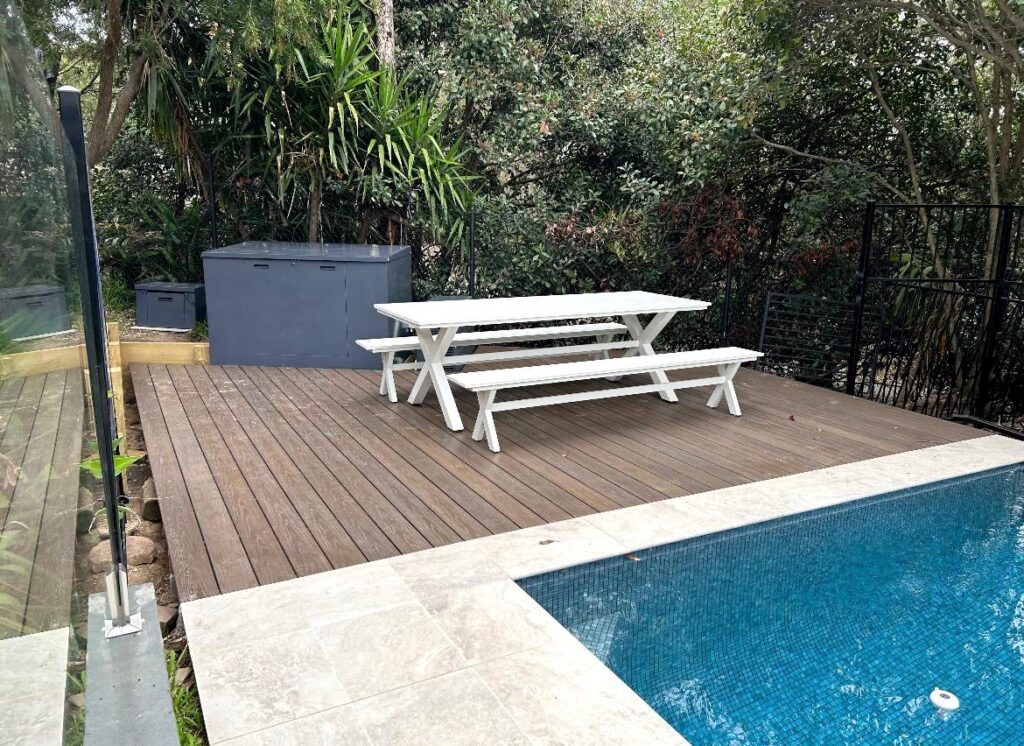
Small gardens do not need to feel boring.
Instead of trying to fit everything into the space, decide what you actually need.
For example, a compact backyard could include:
- A small paved dining area
- Built-in seating
- Vertical planting
- A narrow garden bed
- Feature lighting
- A pathway
The goal is to make every square metre useful.
14. Use Vertical Gardening
When floor space is limited, look upwards.
Vertical gardens, climbing plants, screening plants and wall-mounted planters can add greenery without taking up much ground space.
Vertical planting can also help create privacy between neighbouring properties.
Native screening plants can be useful for privacy and structure when the species is suited to the local conditions.
15. Add Privacy Screening
A backyard becomes much more comfortable when it feels private.
Depending on your property, you could use:
- Native screening plants
- Hedges
- Feature walls
- Timber screens
- Climbing plants
- Layered garden beds
The best option depends on available space, sunlight, soil and how much maintenance you want to do.
16. Create a Natural Stone Feature Wall
A feature wall can provide a strong focal point without requiring a large garden.
Natural sandstone and other stone materials can add texture and a connection to the surrounding landscape.
Use a stone wall behind an outdoor dining area, along a garden boundary or as a feature near an entertaining zone.
17. Replace Unused Lawn with Permeable Surfaces
If you rarely use part of your lawn, consider whether it could be better used as a pathway, gravel garden or another permeable surface.
YourHome recommends reducing lawn and considering alternatives such as garden beds, groundcovers and permeable surfaces where appropriate.
The result can be a backyard that requires less mowing while providing more usable space.
18. Add Native Grasses for Texture
Native grasses can add movement, texture and colour to a landscape.
Species such as suitable Lomandra, Dianella and other locally appropriate grasses can work well as borders, mass planting or feature plants.
Recent Australian gardening coverage has highlighted native grasses as lower-maintenance alternatives in suitable locations, although the right species should always be selected for the site’s conditions.
19. Use Mulch Around Garden Beds
Mulching is one of the simplest ways to improve the appearance and maintenance of a garden.
A suitable layer of organic mulch can help reduce evaporation, suppress weeds and protect soil.
It also gives planting areas a cleaner, more finished appearance.
20. Design a Simple Gravel Garden
A gravel garden can work particularly well in areas where you want to reduce lawn and create a low-maintenance space.
Combine gravel with carefully selected plants, stepping stones and feature rocks.
Choose permeable materials and plants appropriate for your climate and soil conditions.
21. Create a Backyard Dining Area
If your family regularly eats outside, give dining its own dedicated zone.
A paved surface creates a stable base for a table and chairs, while surrounding garden beds can make the space feel more connected to the landscape.
For a complete transformation, consider combining paving with an outdoor kitchen, BBQ area, shade structure or feature wall.
22. Create a Poolside Landscape
A pool can become the centrepiece of a backyard landscape.
Use suitable paving around the pool and combine it with planting, seating and lighting.
Materials such as travertine or sandstone can create a natural, premium appearance when properly selected and installed.
23. Use Lighting to Extend Outdoor Living
Good lighting can completely change how a backyard feels at night.
Consider subtle lighting along:
- Pathways
- Steps
- Retaining walls
- Garden beds
- Feature trees
- Outdoor entertaining areas
Avoid making every area equally bright. A combination of soft feature lighting and practical pathway lighting usually creates a more comfortable atmosphere.
24. Combine Hardscaping and Soft Landscaping
The best landscape designs usually balance hard and soft elements.
Hardscaping can include:
- Paving
- Retaining walls
- Stone features
- Paths
- Steps
- Outdoor structures
Soft landscaping can include:
- Trees
- Shrubs
- Native grasses
- Groundcovers
- Garden beds
- Lawn
Combining both creates a backyard that feels complete rather than simply planted or paved.
25. Design the Backyard Around Your Lifestyle
Perhaps the most important backyard landscaping idea is to design for the way you actually live.
Ask yourself:
- Do you entertain regularly?
- Do you have children?
- Do you need more privacy?
- Do you want less lawn?
- Do you enjoy gardening?
- Do you need space for pets?
- Do you want an outdoor dining area?
- Do you need better access around the property?
A beautiful backyard is useful only when it works for the people using it.
Small Backyard Landscaping Ideas That Make a Big Difference
A small backyard does not mean you have to compromise on style.
The key is to avoid filling the space with too many unrelated features. Instead, use a clear layout and make individual elements perform more than one function.
For example, a retaining wall could also provide seating. A pathway could also become a visual feature. A garden bed could provide privacy while adding greenery.
Some effective small backyard landscaping ideas include:
- Large-format paving
- Built-in seating
- Vertical gardens
- Narrow planting beds
- Multi-purpose outdoor areas
- Simple material palettes
- Feature walls
- Layered planting
- Strategic lighting
- Compact outdoor dining areas
Low-Maintenance Backyard Garden Landscape Ideas
A low-maintenance garden does not mean a garden that requires zero maintenance.
Instead, the goal is to reduce unnecessary work by choosing suitable plants and materials from the beginning.
Consider:
Choose Plants for Your Local Conditions
Australia has many different climates, so a plant that works well in one region may struggle in another. Local climate, soil, rainfall and exposure should influence your plant selection.
Reduce Unnecessary Lawn
If you do not need a large lawn for playing or recreation, replacing some of it with planting beds or suitable permeable surfaces can reduce maintenance.
Use Mulch
Mulch can help protect soil and reduce moisture loss while giving garden beds a neat appearance.
Group Plants by Water Needs
Placing plants with similar water requirements together can make irrigation more efficient.
Consider Drip Irrigation
For gardens that require supplementary watering, efficient irrigation can help deliver water where plants need it.
Landscape Design Ideas for a Modern Australian Backyard
Modern Australian landscape design does not have to mean a completely minimalist garden.
A strong design can combine natural materials, native planting and comfortable outdoor spaces.
Consider pairing:
Natural stone + native planting
The contrast between hard stone and soft greenery creates a timeless appearance.
Paving + outdoor furniture
A defined paved area can create a natural outdoor room.
Retaining walls + planting
Planting around structural walls can soften the overall appearance.
Feature walls + lighting
Subtle lighting can highlight natural stone textures after sunset.
Native grasses + pathways
Grasses can add movement around a structured pathway.
How to Plan Your Backyard Landscape Design
Before starting your backyard project, take some time to plan.
Step 1: Measure Your Backyard
Record the dimensions of the property and identify existing structures, trees, fences and access points.
Step 2: Identify How You Use the Space
Decide whether your priorities are entertaining, relaxing, gardening, children, pets, privacy or a combination.
Step 3: Study Sun and Shade
Observe which areas receive full sun, partial shade and deep shade throughout the day.
Step 4: Choose Your Materials
Select paving, stone, retaining wall and other materials that complement your home.
Step 5: Select Suitable Plants
Choose plants based on your local conditions rather than simply choosing the plants that look attractive at the nursery.
Step 6: Plan Irrigation and Drainage
Good drainage and appropriate watering are important parts of a successful landscape.
Step 7: Create a Realistic Budget
Prioritise the features that will make the biggest difference to how you use the space.
Step 8: Work with an Experienced Landscaping Team
Professional planning can help you avoid costly changes later and make sure structural and aesthetic elements work together.
What Is the Cheapest Way to Landscape a Backyard in Australia?
The cheapest approach depends on the size and condition of your backyard.
Simple changes such as reducing unused lawn, adding mulch, planting suitable native species and creating basic garden beds can be relatively cost-effective.
However, structural work such as retaining walls, major excavation, drainage and large paving areas requires proper planning and professional installation.
Instead of trying to complete everything at once, consider completing the project in stages.
What Plants Are Best for a Low-Maintenance Australian Backyard?
There is no single list of plants that is perfect for every Australian backyard.
Suitable options may include Lomandra, Dianella, Grevillea, Bottlebrush and selected native grasses, depending on your location and growing conditions.
The Australian Government’s YourHome guidance recommends choosing plants that perform well in the local area and avoiding invasive or unsuitable species.
Before planting, check what performs well in your particular climate, soil and available sunlight.
How Do I Design a Small Backyard for Entertaining?
Start by deciding how many people you normally entertain.
Then create one clear entertaining zone rather than trying to fit multiple large areas into a small space.
A compact paved area with seating, planting, lighting and a BBQ can often be more useful than a backyard filled with too many separate features.
Use vertical planting and built-in features to save floor space.
Why Choose Urban Stoneworks for Your Backyard Transformation?
Your backyard should be designed around your property, lifestyle and long-term needs.
Urban Stoneworks works with homeowners across Sydney to create outdoor spaces that combine landscaping, stonework and practical construction.
The team provides landscape construction, paving, retaining walls, garden makeovers, stonework and outdoor living solutions.
Projects can range from smaller garden improvements to complete backyard transformations, with the goal of creating an outdoor space that looks refined and works for everyday life.
You can also explore the company’s completed landscaping and outdoor projects for inspiration.
Ready to Transform Your Backyard?
The right backyard design can give you more than a better-looking garden. It can create additional space for relaxing, entertaining and enjoying your home.
Whether you have a small backyard, a sloping block, an unused lawn or a completely blank space, the right combination of planting, paving, stonework and outdoor living features can make a significant difference.
If you are considering a backyard makeover in Sydney, contact Urban Stoneworks for a free quote and discuss your ideas with the team.